
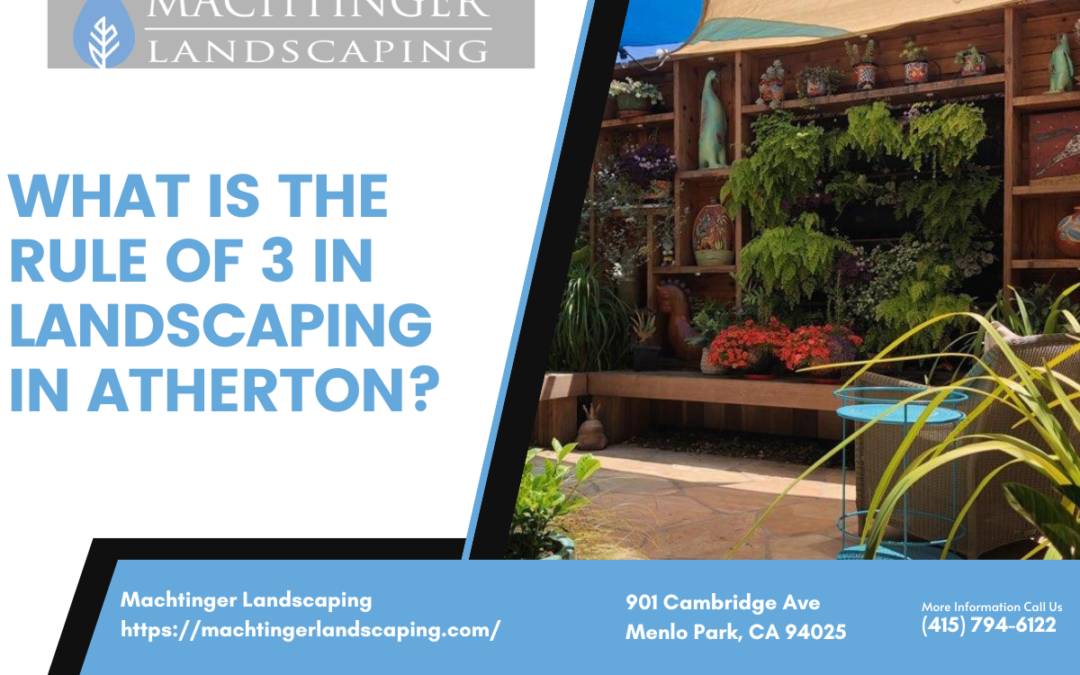
For Atherton homeowners, the rule of 3 in landscaping is far more than a simple gardening tip. It is a foundational principle of landscape architecture used to structure entire estates, creating a cohesive design that unifies large-scale plantings, luxury hardscapes, and distinct outdoor living zones into a sophisticated and valuable property.
The Foundational Principle: What is the Rule of 3 in Landscaping?
At its core, the rule of 3 is a concept rooted in the power of odd number grouping. What is the rule of 3 in landscaping? It’s the practice of arranging plants, boulders, or other elements in groups of three, five, seven, or more. Our brains are wired to find patterns, and even numbers are easily paired off, which can create a static, predictable look. Using odd numbers, however, creates a sense of asymmetrical balance and visual tension that is more pleasing and natural to the human eye. This forces the viewer’s gaze to move around the grouping, engaging with each element individually and as part of a whole.
This answers the related question, what is the unity of three in landscaping? The unity comes from creating a small, cohesive vignette where the elements work together. To “grow 3 together” means selecting three plants that share similar needs (sun, water, soil) but offer contrasting texture and form, creating a micro-composition that is both beautiful and horticulturally sound. This simple principle is the building block for more complex and large-scale designs, but its application can vary dramatically.
Two Scales of Application: A Simple Tip vs. An Estate Philosophy
Understanding how designers apply this principle is key. For some, it remains a small-scale tactic. For landscape architects designing legacy properties, it becomes a guiding philosophy.
The ‘Rule of 3’ as a Simple Gardening Tip
Pros: This approach is easy for any gardener to understand and implement. It’s perfect for creating beautiful container arrangements, refreshing perennial borders, and adding visual interest to a front yard. Using a trio of flowering shrubs can instantly boost curb appeal. It’s a low-cost, high-impact technique for specific areas.
Cons: When applied without a larger vision on an expansive property, this method falls short. It fails to address the critical relationships between hardscape elements, outdoor living spaces, and the home’s architecture. On its own, it lacks the power to create a unified sense of garden flow and rhythm across an entire estate, which is a common landscaping mistake we see on large properties.
The ‘Rule of 3’ as a High-Level Estate Design Principle
Pros: This is where the true power of the principle is realized. It provides the framework for the entire garden composition, from the placement of three large specimen trees to the selection of three complementary hardscape materials. This approach ensures design harmony across acres, creating a cohesive experience that dramatically increases property value. It’s the key to high-end residential design.
Cons: Executing the rule of three at this level requires significant professional expertise in landscape architecture, horticulture, and construction. It involves a substantial investment and a detailed planting plan that considers landscape scale and proportion. Without a skilled designer, an attempt to apply it broadly can feel forced or formulaic.
Scaling the Principle: The Rule of 3 in Atherton Landscape Design
On the grand estates found throughout Atherton and other Silicon Valley communities, landscape designers elevate the rule of three from a simple guideline to a comprehensive design strategy. The “three” refers not just to individual plants, but to entire components of the landscape.
From Plant Grouping to Estate Zoning
On a multi-acre property, we use the principle to delineate and connect major outdoor living spaces. An estate might be structured around three primary zones: a social zone with an outdoor kitchen and patios, a recreational zone featuring a pool and fire pit, and a private, contemplative zone like a formal garden or quiet seating area. This grouping creates a logical and intuitive flow, guiding movement through the property and creating a series of distinct experiences that feel intentionally connected.
Beyond Plants: The Trio of Luxury Hardscape Materials
Sophisticated modern landscape design is built on the interplay between softscape and hardscape elements. We often apply the rule of three to the material palette to create a layered, textural look. For example, a design might feature a trio of cut natural stone for patios and walkways, warm Ipe wood for a raised deck, and smooth, architectural concrete for retaining walls or a sleek water feature. This repetition in design, using a limited but high-quality palette of three materials, ensures visual harmony and a contemporary garden aesthetic.
The Atherton Trio: Sophisticated and Water-Wise Palettes
Given the Bay Area climate, plant selection is paramount. We create sophisticated, water-wise gardening compositions using trios of drought-tolerant plants. This xeriscaping approach doesn’t mean sacrificing beauty. A classic trio might include a structural Agave for bold form, a cluster of soft Ornamental Grasses for movement and texture, and a spreading ground cover plant that offers seasonal color. This naturalistic planting method ensures the garden is not only beautiful but also sustainable and adapted to thrive in San Mateo County, often incorporating California native plants.
Framing the Estate: Creating Powerful Focal Points
Finally, designers use three-element groupings to frame the estate and complement the home’s architecture. This can be achieved by planting a triangular grouping of majestic specimen trees to anchor a corner of the property, placing three identical sculptural elements to create a powerful focal point in the backyard, or using purposeful outdoor lighting design with trios of fixtures to highlight architectural features. These works establish a clear visual hierarchy, guiding the eye and creating a profound sense of balance and permanence.
Navigating Atherton’s Unique Landscape Regulations
Expertise in design principles must be paired with an intricate understanding of local codes. In the city of Atherton, specific regulations govern what can and cannot be done, particularly in front yard landscaping and areas adjacent to public spaces. A professional landscape contractor must navigate these rules to ensure a project is both beautiful and compliant.
- For instance, any landscaping installed between three and six feet from the public right-of-way is strictly limited to groundcover or shrubs that will not exceed 36 inches in mature height according to town ordinance.
- Furthermore, property owners who wish to place new landscaping within that public right-of-way must first secure an encroachment permit and provide the town with a legally binding “covenant running with the land” as mandated by local code.
- Even the choice of street trees is regulated. Newly planted trees must be selected from a town-approved list, and the installation of deep root planters or barriers may be required to protect public infrastructure.
Ignoring these details can lead to costly fines and project delays. A deep understanding of these local requirements is a non-negotiable factor when selecting a design and installation partner.
Key Factors for Your Atherton Landscape Project
When planning a significant garden renovation or new landscape installation, homeowners should evaluate potential partners on the following criteria:
Ability to create a cohesive design across the entire estate.
A premier design firm moves beyond isolated features. They use principles like odd number grouping to ensure every element—from paver patios to perennial borders—contributes to a singular, unified vision that enhances the entire property.
Expertise in integrating luxury hardscapes and specialty features.
The successful integration of elements like outdoor kitchens, water features, and complex lighting schemes requires a designer who understands how to balance materials, textures, and forms. They use hardscape features to create structure and define outdoor spaces, ensuring they complement the softscape design.
Understanding of and adherence to complex local Atherton regulations.
As detailed above, knowledge of local codes is critical. An experienced firm has a proven track record of designing and executing projects that meet all municipal requirements, ensuring a smooth process from concept to completion.
Long-term property value enhancement.
A well-conceived landscape is a significant financial asset. A design that prioritizes high-quality materials, sustainable practices, and timeless principles like the rule of three ensures not just immediate enjoyment but also a substantial return on investment through increased property value and curb appeal.
Making the Right Choice for Your Needs
The right approach depends entirely on your property’s specific context and your long-term goals. There is no single “best” way, only the way that is right for you.
For the New Estate Owner
If you are developing a comprehensive master plan for a new property, you must think at the estate level. Applying the rule of three as a high-level philosophy is essential. This will establish the foundational “bones” of your landscape—the primary zones, the major hardscapes, and the key specimen trees—that will define the property for decades to come.
For the Major Renovation Homeowner
For those adding a significant new feature like a pool or an outdoor entertaining area, a hybrid approach is often most effective. The overarching principle should be used to seamlessly integrate the new construction with the existing landscape. At the same time, the simpler “gardening tip” application can be used to refresh and unify older planting areas, ensuring the entire yard feels connected and revitalized.
For the Legacy Property Steward
If you are focused on the long-term health and strategic improvement of a mature garden, the application of the rule of three becomes more nuanced. The grand structure is established. Here, an expert designer uses the principle for targeted interventions—like replacing a single aging shrub with a complementary trio of younger plants that offer better seasonal interest, or adding a three-element sculpture to create a new focal point without disrupting the garden’s established character.
Ultimately, applying the Rule of Three with sophistication is what separates a simple yard from a landmark Atherton estate. It requires a deep understanding of landscape scale and proportion, horticultural science, and architectural integration. For homeowners in Atherton and the surrounding communities seeking to create a truly cohesive and valuable outdoor living space, the team at Machtinger Landscape Design offers unparalleled expertise. Located in Menlo Park, CA, we have over two decades of experience in high-end residential design and landscape installation. Contact us today for a comprehensive consultation to discuss your property’s potential.