
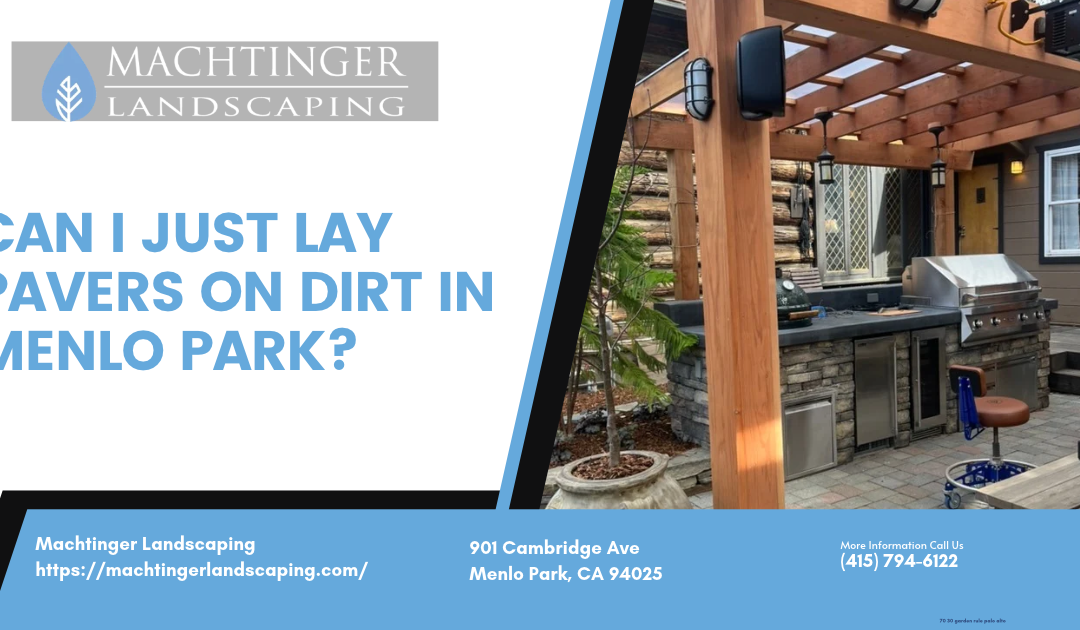
No, you cannot lay pavers straight on dirt in Menlo Park, CA. While technically possible, this approach is a guaranteed failure due to our region’s highly expansive clay soil. Without a proper compacted aggregate base, your paver surface will heave, shift, and become an uneven hazard within one to two years.
The “Menlo Park Soil Problem”: Our Ground is Working Against You
As hardscape contractors with decades of experience working on properties from the Allied Arts Guild to Sharon Heights, we’ve seen the aftermath of countless well-intentioned but misguided paver projects. The number one reason for paver base failure in our area is a fundamental misunderstanding of our ground. Most native Bay Area soils consist of clay, which expands and contracts with moisture according to local material suppliers. Here in San Mateo County, this isn’t just a minor issue; it’s the defining factor for any landscape construction.
This isn’t speculation. Scientific data confirms the challenge we face. The U.S. Geological Survey’s map of the Menlo Park Quadrangle indicates that large areas within and around Menlo Park contain soils with a ‘High’ shrink-swell potential as documented in their official surveys. What this means is that during our wet winters, the clay soil beneath your home absorbs water and swells, pushing everything upward. In the dry summer months, it shrinks and cracks, causing the ground to sink. Laying interlocking pavers directly on this unstable surface is like building a house on a waterbed—it’s only a matter of time before it all falls apart.
From Heaving to Hazardous: The Inevitable Results of a Shortcut
So, what happens if you don’t put gravel under pavers and just lay them on the dirt? The results are predictable, costly, and often dangerous. Within the first year, you will begin to see:
- Uneven Pavers: As the clay soil expands and contracts unevenly, some pavers will be pushed up while others sink, creating a lumpy, unprofessional-looking surface.
- Dangerous Tripping Hazards: What starts as minor paver shifting quickly becomes a safety issue, with raised edges creating significant trip-and-fall risks on your new patio or walkway.
- Sinking Pavers and Poor Drainage: Low spots will form, collecting water and creating puddles. This accelerates the problem, saturating the soil below and causing even more sinking pavers and instability. Proper drainage for patios is impossible without a permeable base.
- Rampant Weed Growth Between Pavers: Placing pavers on nutrient-rich topsoil is an open invitation for weeds. Without a sterile aggregate base, weed growth between pavers becomes a constant, frustrating maintenance battle.
These issues aren’t a possibility; they are a certainty. Studies and professional experience show that failing to install a proper sub-base of gravel and a base of sand will result in pavers that shift, sink, and separate within a year or two a fact confirmed by industry experts. What began as a shortcut quickly turns into a need for extensive paver repair services.
The Anatomy of a Bulletproof Paver Base
The only way to guarantee the longevity of residential hardscaping in areas like Menlo Park, Atherton, and Palo Alto is to build a foundation that isolates the pavers from the volatile soil below. This is the professional standard for all hardscape construction, from a simple walkway construction to elaborate driveway pavers.
The correct pavers installation process involves:
- Excavation for Pavers: We dig out the native clay soil to a depth of 6 to 10 inches, depending on the application.
- Compacted Aggregate Base: We install a 4- to 8-inch layer of Class II base rock. This crushed rock is laid in lifts and compacted with a heavy-duty plate compactor to create a solid, stable, and permeable paver foundation.
- Bedding Sand: A 1-inch layer of coarse sand is screeded perfectly level on top of the base. This is the bed the pavers are actually set into.
- Paver Laying and Edge Restraints: The pavers, whether they are concrete pavers from Calstone or natural stone patios, are laid in the desired pattern. A rigid edge restraint is installed to prevent paver shifting laterally.
- Joint Sand and Compaction: Finally, polymeric sand is swept into the joints and activated with water. This sand hardens like mortar, locking the interlocking pavers together and preventing weed growth.
A common question we get is, “Can you park your car on pavers?” The answer is absolutely, provided the base is built correctly. For driveway pavers designed to handle vehicle loads, we engineer a much deeper and more robust compacted base (often 8-12 inches) to distribute the weight and prevent any sinking over time.
Shortcut vs. Professional Installation: A Clear Comparison
Understanding the long-term implications is critical when evaluating paver installation cost. The “cheap” way is often the most expensive in the end. These expansive soils cause billions of dollars in damage each year in the United States according to geological experts, and a failed paver project is a small but personal piece of that statistic.
Longevity and Durability of the Paver Surface
On Dirt: Expect failure within 1-3 years. The surface will become uneven and require a complete tear-out and replacement.
With Pro Base: A properly installed paver surface will last for 25-50 years or more with minimal paver maintenance.
Upfront Cost vs. Long-Term Value and Repair Costs
On Dirt: Very low upfront material cost. However, the cost of a full demolition and professional re-installation in 2-3 years will be significantly higher than doing it right the first time.
With Pro Base: Higher upfront investment in materials (base rock, sand) and labor (excavation, compaction). This investment protects the entire project, providing decades of value and avoiding costly paver repair work.
Prevention of Shifting, Sinking, and Uneven Surfaces
On Dirt: Offers zero protection. The pavers are directly subject to the shrink-swell cycle of Menlo Park’s clay soil.
With Pro Base: The compacted aggregate base creates a stable “floating” foundation that bridges over the soil movement, keeping the paver surface perfectly level and stable.
Professional-Grade Appearance vs. Amateur Results
On Dirt: Even a perfect initial installation will look lumpy and unprofessional within a year. The result detracts from your property value.
With Pro Base: Achieves and maintains the crisp lines, smooth surface, and high-end look expected of quality hardscape design. It enhances your outdoor living spaces and adds significant curb appeal.
Making the Right Choice for Your Needs
At Machtinger Landscape Design, we believe in empowering homeowners to make informed decisions for their property. Where you fall on the spectrum will determine your best path forward.
For the DIY Shortcut Seeker
You’re focused on minimizing upfront costs and labor, and the idea of just leveling dirt and laying pavers is tempting. We understand the appeal. However, given our specific local soil conditions, this path will lead to frustration and wasted money. A better approach is to scale your project down to a size you can afford to do correctly, or to plan and save for a professional installation that will add lasting value to your home.
For the Quality-Conscious Investor
You prioritize a high-quality, long-lasting result and see this as an investment in your property. You are our ideal client. You understand that the work done beneath the surface is what protects your investment in beautiful materials like Belgard pavers or a stunning fire pit patio. For you, hiring a licensed paver contractor who understands the science of paver base preparation isn’t a cost—it’s insurance for your hardscape.
For the Frustrated Fixer
You may have already tried the shortcut or hired one of the low-cost local paving companies, and now you’re dealing with a failing patio. Your problem is extremely common in the Bay Area. Unfortunately, simple paver leveling is not a permanent solution. The only real fix is to start over: remove the existing pavers, excavate the failed base and soil, and install a brand new, professionally compacted paver foundation. It’s a tough pill to swallow, but it’s the only way to get the result you wanted in the first place.
Ultimately, the performance and beauty of any paver feature—from outdoor kitchens to simple walkways—depend entirely on the quality of the unseen foundation beneath. A proper base isn’t an upsell; it’s the core of a successful project. If you are ready to invest in a durable, beautiful hardscape that will stand the test of time in Menlo Park, we are here to help. Contact Machtinger Landscape Design today to request a complimentary consultation and receive a detailed, free hardscape estimate for your project.