
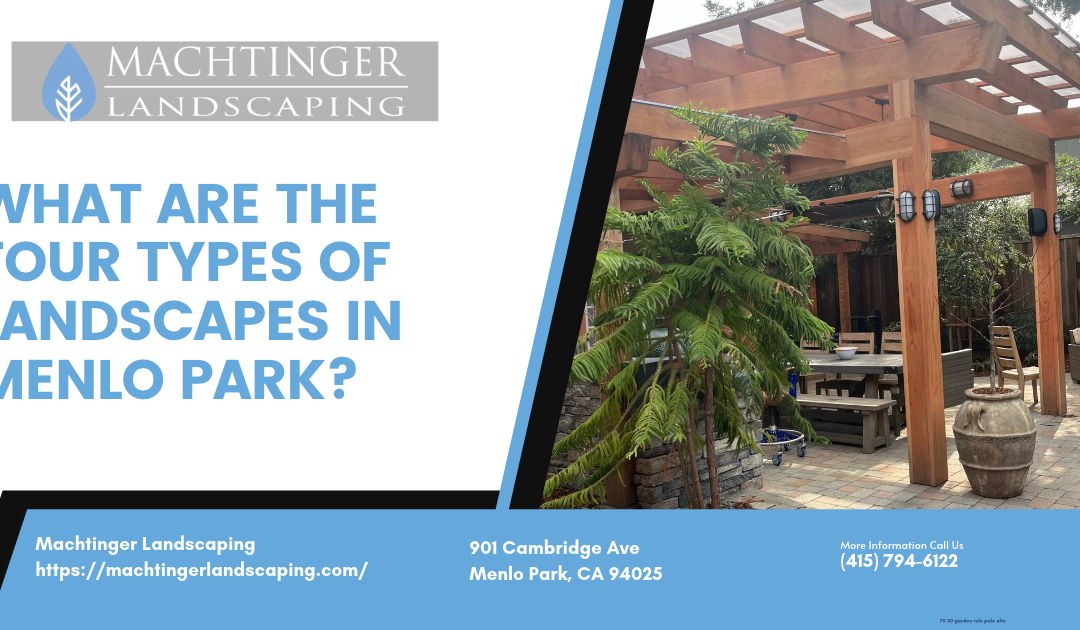
Menlo Park’s landscape is a complex story told in four distinct chapters. Beyond its famous suburban charm, the city is a blend of resilient native ecology, world-shaping corporate campuses, and the surprising remnants of a forgotten industrial past, each contributing to the unique character of the area and influencing how landscape construction is approached here today.
Beyond the Picket Fence: Understanding Menlo Park’s Layered Identity
When clients ask us to design a landscape in Menlo Park, CA, the conversation often begins with images of tree-lined streets and verdant public parks. While this is certainly one face of the city, our two decades of experience designing and building here on The Peninsula have shown us a much richer, more nuanced reality. The true landscape is a dynamic tapestry woven from four competing identities. Understanding these layers is the first step in creating a space—whether a residential home garden or a sprawling commercial property—that is truly in dialogue with its surroundings.
Our firm’s expertise is deep, semantically expanded from the query ‘What are the four types of landscapes in Menlo Park?’ to encompass a comprehensive understanding of land use planning across the entire San Francisco Bay Area. This allows us to see how each identity influences property value, aesthetic choices, and environmental sustainability.
1. The Natural Foundation: The Original Oak Woodlands
Before the streets were laid and the foundations poured, this corner of San Mateo County had its own powerful identity. Before European settlement, the area now known as Menlo Park was predominantly covered in oak-bay laurel woodlands and grasslands. This is the ecological bedrock of the region. You can still see echoes of it in the majestic oaks that canopy older neighborhoods and along the banks of San Francisquito Creek, which forms the city’s northern border and remains one of the few unchannelized creeks in the Bay Area. This resilient natural landscape offers profound inspiration for modern design, particularly for clients interested in drought-tolerant landscaping, xeriscaping, and creating authentic California native plant gardens that thrive in our Mediterranean climate.
2. The Suburban Veneer: The Curated Ideal
This is the Menlo Park of the popular imagination. It’s the manicured lawns of Sharon Heights, the charming streetscapes of The Willows, and the bustling, family-friendly atmosphere of Burgess Park and Nealon Park. This suburban landscape is a testament to a carefully curated vision of community and prosperity. As a local expert, we recognize the immense value placed on this aesthetic; as of December 2022, the median home price in Menlo Park was $2.5 million, a figure that reflects the significant investment residents make in their properties. This landscape is defined by human intention, from the urban forestry programs managed by the city to the pristine outdoor living areas we design for single-family homes, transforming a simple lot into a personal sanctuary.
3. The Corporate Terra: Cities Within a City
You cannot discuss the modern landscape of Menlo Park without acknowledging the immense influence of the tech industry. People often ask, “What big company is in Menlo Park?” The most prominent answer is Meta. Meta Platforms is headquartered in Menlo Park, with its main campus located on the former Sun Microsystems site, a move that reshaped a huge tract of the city’s eastern edge near the bay. This type of corporate campus landscaping operates on a massive scale, creating self-contained environments with their own aesthetics, circulation, and amenities. It’s a legacy that runs deep; after all, SRI International’s Menlo Park campus is the location where the first public demonstration of the computer mouse occurred in 1968. These futuristic landscapes, often found along the US Route 101 corridor, have become a media icon for Silicon Valley’s global identity, prioritizing innovation, employee well-being, and a powerful brand image.
4. The Forgotten Ghosts: Post-Industrial Ruins and Reclamations
Perhaps the most surprising landscape is the one that whispers of a different past. Beneath the gloss of tech and suburbia, Menlo Park has a post-industrial skeleton. The most visible example is the Dumbarton Rail Corridor, which last saw regular passenger service in 1982, leaving behind a scar of decaying infrastructure that hints at an era of rail and industry. But these ghosts also offer opportunities for transformation. A brilliant example of this is Bedwell Bayfront Park, a beloved 160-acre public space built on a former landfill site. These landscapes provide a compelling counter-narrative, showing how forgotten or derelict spaces can be reimagined for community use and ecological restoration, a process we find deeply inspiring.
Comparing Menlo Park’s Landscapes: Nature vs. Curation
Each of these four identities presents a different philosophy of land use. For homeowners and property managers, the choice of which to embrace often comes down to a comparison between the wild and the controlled.
Natural & Historical Landscapes (Native Ecology, Post-Industrial Ruins)
- Pros: Emphasizes authenticity, environmental sustainability, and a deep connection to the local Bay Area ecology. Often requires less water and maintenance once established. Designs can have a unique, story-rich character.
- Cons: The aesthetic can be less manicured, which may not align with traditional suburban tastes. Native chaparral requires knowledgeable fire-wise management.
Man-made & Curated Landscapes (Suburban Ideal, Corporate Campus)
- Pros: Offers complete aesthetic control, creating highly functional and visually pristine environments for living, working, and recreation. Can significantly increase curb appeal and perceived property value.
- Cons: Typically demands higher inputs of water, energy, and ongoing maintenance. Can create ecologically homogenous zones that offer less support for local wildlife.
Key Factors in Your Landscape Design Decision
Choosing a direction for your property, whether it’s a small residential m² lot or a sprawling commercial m² acre lot ft² property, involves balancing several key considerations. Our process at Machtinger Landscape Design always begins with a thorough evaluation of these factors.
Aesthetic and Design Vision Alignment
Your landscape should be a reflection of your personal taste or corporate brand. Do you envision a lush, green oasis perfect for entertaining, or a ruggedly beautiful native garden that buzzes with local pollinators? Aligning on the vision is the most critical first step.
Comprehensive Scope of Services
A successful landscape is more than just plants. It requires an integrated system. Consider if your project needs hardscape elements like patios and walkways, advanced irrigation, custom lighting for evening ambiance, or outdoor structures. A cohesive plan covers all these elements from the start.
Quality, Durability, and Long-term Maintenance
The initial design is just the beginning. The choice of materials, construction quality, and plant selection directly impacts the longevity and required upkeep of your space. We emphasize craftsmanship and foresight to ensure your landscape matures beautifully and stands the test of time.
Sustainability and Water Management Efficiency
In California, water is our most precious resource. Modern landscape design must prioritize water-wise strategies. This includes everything from selecting drought-tolerant plants and installing smart irrigation systems to designing for proper drainage and groundwater retention, a specialty in flatlands near the bay.
Making the Right Choice for Your Needs
The “best” landscape is the one that perfectly serves your goals. While some wonder what famous people live in Menlo Park, the truth is that great design is for everyone. Here’s how we guide different types of clients:
For the Suburban Idealist
You seek a perfect, manicured outdoor living space. Our focus would be on creating flawless execution of a classic vision. This means selecting robust turf varieties, designing elegant patios and outdoor kitchens with premium materials, and installing layered lighting to create a resort-like feel for entertaining day and night.
For the Eco-Conscious Naturalist
You want a garden that reflects the local ecology and conserves resources. We would guide you through the beauty of California native plants, designing a xeriscape that provides year-round interest while drastically reducing water usage. Our plan would focus on creating a habitat that supports local wildlife and honors the original oak woodland spirit of Menlo Park.
For the Corporate Facilities Manager
Your responsibility is a large-scale campus that must be impressive, durable, and reflective of your brand. We would approach this with a focus on master planning, selecting hardy, architecturally interesting plants, engineering efficient large-scale irrigation, and designing durable hardscapes that can withstand high traffic while projecting an image of innovation and quality.
Ultimately, navigating the rich and varied landscapes of Menlo Park requires a partner with deep local knowledge and a commitment to quality craftsmanship. At Machtinger Landscape Design, we combine artistic vision with practical expertise to create outdoor spaces that are not only beautiful and functional but are also in harmony with their unique surroundings. For a personalized assessment of your property and to discover its true potential, contact our expert team today for a consultation.